
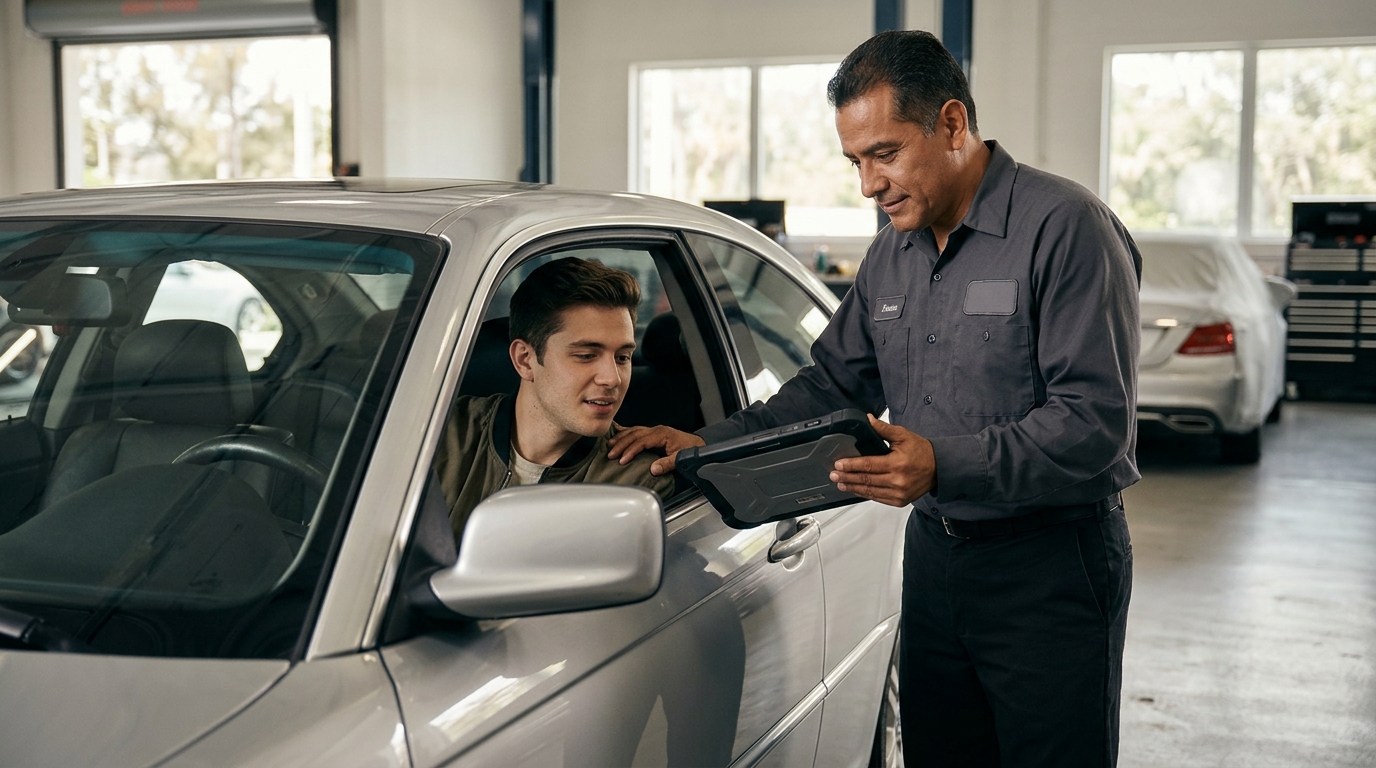
A complete diagnostic inspection of a used European car involves scanning the vehicle's electronic control units, checking for stored fault codes, and physically verifying mechanical systems. At Euro Auto Service in North Miami Beach, this process ensures you understand the true condition of the vehicle before purchase. It moves beyond a simple visual check to reveal hidden electrical and mechanical issues that standard scans might miss.
The Role of Factory-Grade Diagnostic Tools
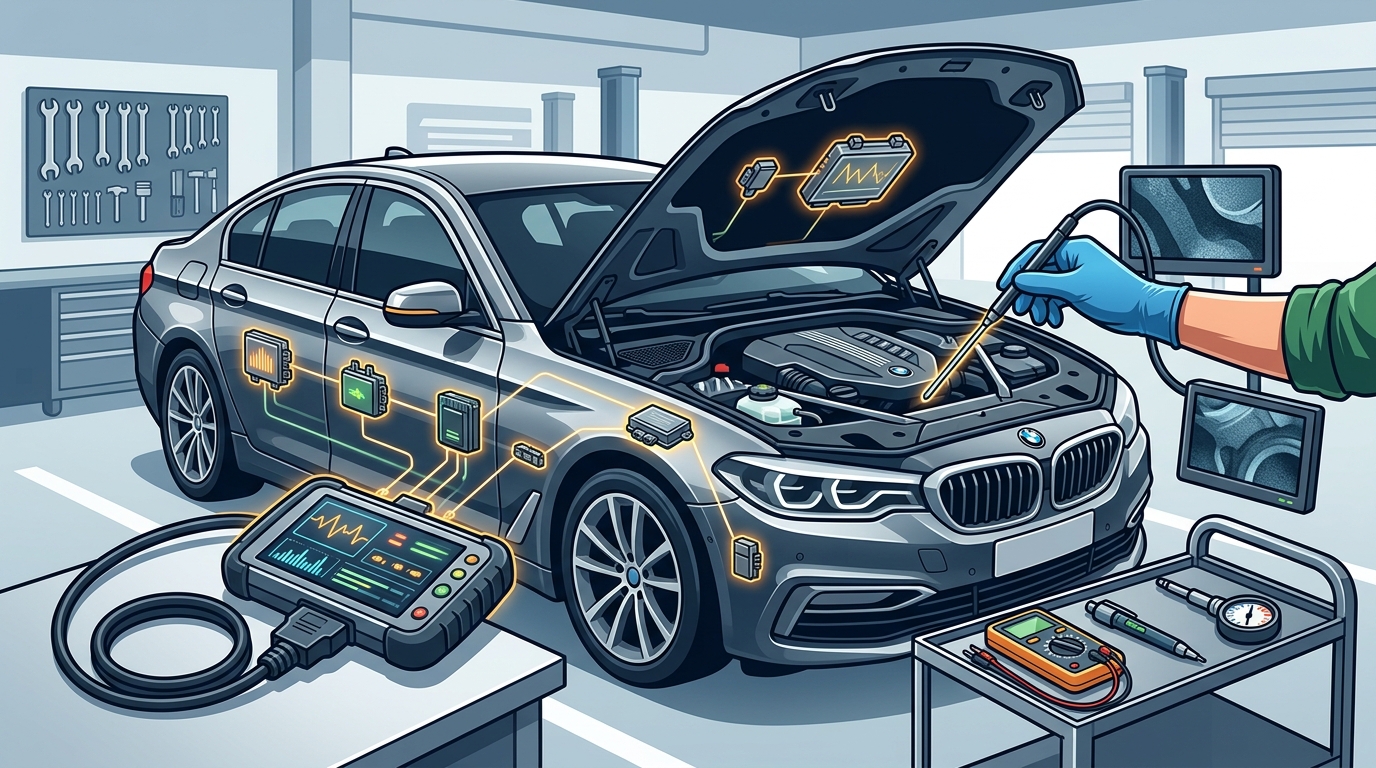
Modern European vehicles rely heavily on complex electronic networks. A basic OBD2 scanner often only reads engine codes, missing critical data from transmission, suspension, and body modules. Professional shops use factory-grade diagnostic platforms to access these deeper systems. This level of access allows technicians to read live data, perform actuator tests, and verify if a fault is active or historical.
For example, a BMW might show a check engine light due to a minor sensor issue, but the factory tool can determine if the underlying problem involves the high-pressure fuel pump or a wiring harness fault. This distinction is vital for pricing a used car. At Diagnostics & Technology services, we utilize these advanced tools to provide a comprehensive view of the car's health, ensuring no hidden faults remain undetected.
Digital Vehicle Inspection (DVI) Transparency
A Digital Vehicle Inspection (DVI) is a documented report that includes photos and videos of the vehicle's condition and any identified faults. This process provides transparency by showing the customer exactly what the technician sees. Instead of relying on verbal descriptions, you receive visual proof of issues such as oil leaks, worn brake pads, or damaged suspension components.
The DVI typically categorizes findings into urgent, soon, and monitor priorities. This helps you make informed decisions about immediate repairs versus long-term maintenance. For instance, a leaking water pump in a Mercedes-Benz might be categorized as 'soon' if the coolant level is stable, while a failing transmission module would be 'urgent.' This structured approach removes guesswork and builds trust in the inspection process.
Common Mechanical and Electrical Faults
European cars are known for their performance but also for specific recurring issues. A thorough diagnostic inspection targets these known weak points. For BMWs, this often includes checking the timing chain tensioners and cooling system components. For Mercedes-Benz vehicles, the focus may shift to transmission health and electrical module stability. These checks are critical because they can be expensive to repair if ignored.
Electrical faults are particularly common in luxury brands like Jaguar and Land Rover. Issues with window regulators, infotainment systems, or air suspension compressors can be tricky to diagnose without specialized knowledge. Our team at Problems We Fix regularly encounters these scenarios. By identifying these faults early, you can negotiate a better price or decide if the vehicle is worth the investment.
The Importance of Expert Technician Certification
The skill of the technician performing the inspection is just as important as the tools they use. A certified master technician has the training to interpret complex diagnostic data and distinguish between false positives and genuine failures. For example, a BMW Factory-Trained Level 1 Master Technician has extensive knowledge of the vehicle's engineering, allowing for precise fault isolation.
This expertise is crucial for used European cars, where symptoms can be misleading. A general mechanic might replace a part that is not actually faulty, leading to unnecessary costs. In contrast, a specialist can pinpoint the root cause, saving you time and money. At About Us, we highlight the qualifications of our lead technician, Andrey Beck, who brings over 14 years of experience in European automotive repair. This level of expertise ensures that your inspection is thorough and accurate.
Preparing for Your Inspection
Before bringing your used European car for a diagnostic inspection, gather any available service records. These documents can provide context for the technician, helping them understand the vehicle's maintenance history. Additionally, note any specific concerns you have, such as unusual noises, warning lights, or performance issues. This information helps the technician focus on the areas you are most worried about.
It is also helpful to have the vehicle's battery charged and the fuel tank at least half full. These simple steps ensure that all electronic systems can be tested properly. If you are considering a pre-purchase inspection, schedule it before finalizing the sale. This gives you the opportunity to address any findings with the seller. For more details on our inspection services, visit our Pre-Purchase Inspection page.
Key Takeaways
- Factory-grade diagnostic tools are essential for accessing all electronic systems in modern European cars.
- Digital Vehicle Inspections (DVI) provide visual proof of faults, enhancing transparency and trust.
- Common faults in European cars include timing chain issues, electrical module failures, and cooling system leaks.
- Certified master technicians bring the expertise needed to accurately diagnose complex problems.
- Gathering service records and noting specific concerns before the inspection helps the technician focus on key areas.
- A thorough diagnostic inspection can reveal hidden issues, allowing you to make an informed purchase decision.
Frequently Asked Questions
How long does a complete diagnostic inspection take?
A complete diagnostic inspection typically takes between two and four hours, depending on the vehicle's complexity and the number of faults found. This time allows the technician to thoroughly scan all modules and physically verify any identified issues.
What is the difference between a diagnostic scan and a full inspection?
A diagnostic scan only reads fault codes from the vehicle's computer, while a full inspection includes physical checks, live data analysis, and actuator tests. The full inspection provides a more comprehensive view of the vehicle's condition.
Can a diagnostic inspection detect all problems with a used car?
No, a diagnostic inspection cannot detect all problems, but it can identify most electronic and mechanical faults. Some issues, such as cosmetic damage or minor wear, may require a separate visual inspection.
Do I need to be present during the inspection?
You do not need to be present during the inspection, but you will receive a detailed report with photos and videos. This allows you to review the findings at your convenience and ask questions if needed.
How much does a diagnostic inspection cost?
The cost of a diagnostic inspection varies depending on the vehicle and the scope of the work. For specific pricing, please contact Euro Auto Service to schedule an appointment.
Conclusion
Understanding what to expect during a complete diagnostic inspection of a used European car is crucial for making an informed purchase decision. By using factory-grade tools, providing transparent DVI reports, and leveraging expert technician knowledge, Euro Auto Service ensures that you have a clear picture of the vehicle's condition. Whether you are buying a BMW, Mercedes-Benz, or another luxury brand, our team is dedicated to helping you avoid costly surprises. To schedule your inspection, today and experience the difference that specialized European car expertise makes.