

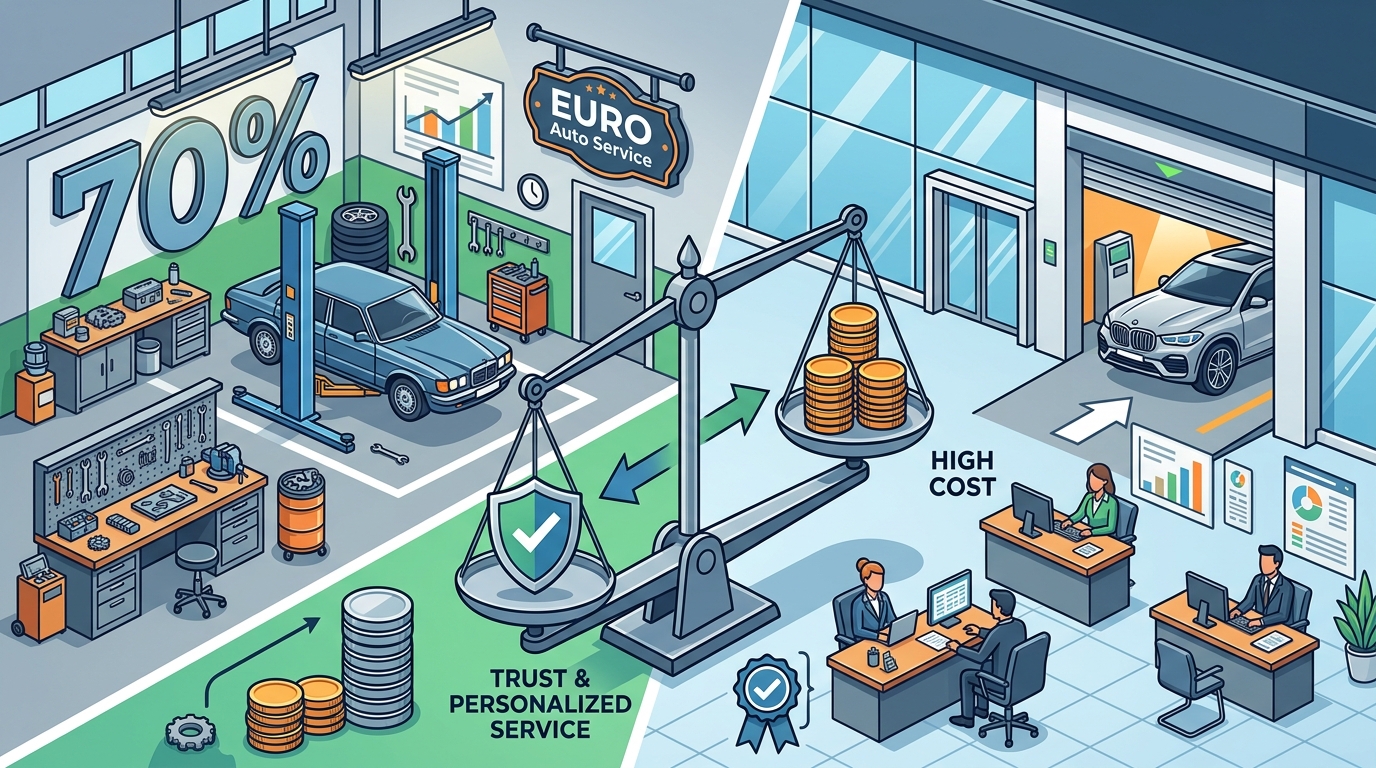
Choosing where to service your vehicle is one of the most significant financial decisions for any car owner. The debate between independent shops and dealership service centers often centers on trust, cost, and convenience. According to a 2024 report by the Automotive Service Association, independent repair shops handle over 70% of all vehicle maintenance in the United States. This statistic highlights a massive shift in consumer behavior toward more affordable and personalized service options. Understanding the nuances of each model helps you make an informed choice that protects your wallet and your vehicle's longevity.
Cost Analysis: Parts and Labor Rates
The most immediate difference between independent mechanics and dealership service departments is the price tag. Dealerships typically charge higher labor rates because they have significant overhead costs, including facility maintenance, brand licensing fees, and specialized training programs for their technicians. These costs are passed directly to the consumer. In contrast, independent shops like Euro Auto Service NMB operate with leaner overhead structures, allowing them to offer competitive labor rates without compromising on quality.
Parts pricing is another critical factor. Dealerships are required to use Original Equipment Manufacturer (OEM) parts, which are often more expensive than aftermarket or even high-quality aftermarket alternatives. OEM parts are defined as components made by the same company that manufactured the original part for the vehicle. While this ensures exact fitment, it does not always guarantee superior performance for older vehicles. Independent shops can source OEM parts at lower wholesale prices or offer certified aftermarket alternatives that meet or exceed manufacturer specifications. (About)
For European vehicles, the cost disparity can be even more pronounced. European cars often require specialized diagnostic tools and specific fluid types that are proprietary to the brand. Dealerships charge a premium for this exclusivity. Independent specialists, however, invest in this same technology to serve the broader market, spreading the cost across many customers. This economic model allows them to provide dealer-level service at a fraction of the cost. Data from the Consumer Reports Auto Service Index indicates that independent shops can save owners an average of 20 to 30 percent on routine maintenance. (Faq)
Expertise and Specialized Equipment
Dealerships are often perceived as the pinnacle of automotive expertise because their technicians are factory-trained. They receive regular updates on new technologies and recall procedures directly from the manufacturer. This training is essential for complex modern vehicles with integrated computer systems. However, the definition of expertise varies. A dealership technician may be an expert in one specific brand, such as BMW or Mercedes-Benz, but lack depth in others. This specialization is known as vertical expertise.
Independent shops, particularly those specializing in European or luxury vehicles, often employ technicians with broader experience across multiple makes and models. This horizontal expertise allows them to diagnose issues that might be overlooked by a technician focused solely on one brand. For instance, a mechanic who works on various European brands can recognize common failure patterns across different manufacturers, such as cooling system issues in Audi or electrical gremlins in Volkswagen. This cross-brand knowledge is a significant advantage in diagnostic accuracy.
Equipment investment is another differentiator. Dealerships have access to the latest proprietary diagnostic software and tools. Independent shops must purchase these tools independently, which can be costly. However, many high-end independent shops invest heavily in this technology to remain competitive. They often have access to the same diagnostic data streams as dealerships. The key is to verify that the independent shop stays current with software updates. A shop that neglects its diagnostic tools cannot effectively service modern vehicles. The Society of Automotive Engineers notes that software updates are critical for maintaining vehicle safety and performance standards.
Warranty Coverage and Compliance
One of the most common concerns for vehicle owners is the impact of independent service on their warranty. The Magnuson-Moss Warranty Act in the United States protects consumers by stating that manufacturers cannot void a warranty simply because service was performed by an independent shop. This law is crucial for maintaining consumer choice. It ensures that as long as the service meets manufacturer specifications, the warranty remains valid. This legal framework empowers consumers to seek better prices without fear of losing coverage.
However, documentation is key. When you service your vehicle at an independent shop, you must keep detailed records of the work performed and the parts used. These records serve as proof that the maintenance was done correctly. If a warranty claim arises, these documents can protect your rights. Dealerships automatically provide these records through their internal systems, which is a convenience factor. Independent shops can provide equally detailed invoices and service reports, but it requires the owner to be organized.
For newer vehicles still under the manufacturer's warranty, some owners prefer to stay with the dealership for peace of mind. This preference is often driven by the fear of potential disputes. However, many independent shops offer their own service warranties on parts and labor. This additional layer of protection can provide greater confidence than the limited warranty provided by a dealership. A service warranty is defined as a guarantee provided by the repair shop that covers the cost of repairs if the issue recurs within a specified time frame. This commitment to quality is a hallmark of reputable independent providers.
Convenience and Turnaround Time
Dealerships often struggle with scheduling bottlenecks. Due to high volume and limited technician availability, waiting times for appointments can be extensive. This delay is a significant inconvenience for busy professionals who rely on their vehicles for daily commutes. The average wait time for a dealership appointment can exceed two weeks during peak seasons. This lack of availability can disrupt personal and professional schedules.
Independent shops typically offer more flexible scheduling options. They can often accommodate same-day or next-day appointments for routine maintenance. This agility is a major advantage for urgent repairs or time-sensitive maintenance. Additionally, independent shops often provide loaner vehicles or shuttle services, but they are more likely to offer personalized pickup and drop-off options. This level of customer service is tailored to individual needs rather than corporate policy. The American Automobile Association emphasizes that vehicle reliability is directly linked to timely maintenance, making scheduling flexibility a critical factor.
Turnaround time is another area where independent shops excel. Dealerships often follow a rigid workflow that can delay vehicle release. Independent shops can prioritize work based on urgency and technician availability. This efficiency reduces the time your vehicle is out of your possession. For European vehicles, which may require specific parts or diagnostic cycles, this efficiency is even more valuable. A shop that understands the specific needs of European engineering can streamline the repair process effectively.
Transparency and Communication
Communication styles differ significantly between dealerships and independent shops. Dealerships often rely on standardized scripts and digital communication channels. While this ensures consistency, it can feel impersonal. Independent shops often foster direct relationships between the customer and the technician or service advisor. This personal connection allows for more detailed explanations of vehicle issues and repair options.
Transparency in pricing is another critical aspect. Dealerships may present complex billing structures that are difficult for consumers to understand. Independent shops typically provide clear, itemized estimates before work begins. This upfront pricing builds trust and prevents surprise charges. The Better Business Bureau highlights that clear communication is a top factor in customer satisfaction for auto repair services. A shop that explains the "why" behind a repair recommendation demonstrates true expertise.
Furthermore, independent shops are often more willing to discuss repair priorities. They can help you distinguish between urgent safety issues and cosmetic concerns. This guidance allows you to make informed decisions about your vehicle's care. Dealerships may push for additional services to increase revenue, a practice known as upselling. While upselling can be legitimate, it is often perceived as aggressive in a dealership setting. Independent shops focus on building long-term relationships, which encourages honest advice over short-term gains.
Key Takeaways
- Cost Savings: Independent shops typically charge 20-30% less for labor and parts compared to dealerships.
- Legal Protection: The Magnuson-Moss Warranty Act protects your warranty regardless of where you service your vehicle.
- Specialized Expertise: Independent specialists often have broader cross-brand knowledge for European vehicles.
- Scheduling Flexibility: Independent shops offer more flexible appointments and faster turnaround times.
- Personalized Service: Direct communication with technicians fosters trust and transparency.
- Documentation: Keep detailed records from independent shops to maintain warranty validity.
- Quality Assurance: Reputable independent shops use OEM parts and offer service warranties.
Frequently Asked Questions
Does servicing my car at an independent shop void the warranty?
No. The Magnuson-Moss Warranty Act prohibits manufacturers from voiding warranties simply because you choose an independent repair shop, provided the work is performed to manufacturer specifications.
Are independent shops equipped to handle European vehicles?
Yes. Many independent shops specialize in European brands and invest in the same proprietary diagnostic tools and training as dealerships to ensure accurate repairs.
How do I know if an independent shop is reputable?
Look for certifications such as ASE (Automotive Service Excellence), positive customer reviews, and membership in professional organizations like the Automotive Service Association.
Do independent shops use OEM parts?
Many reputable independent shops offer OEM parts upon request. They also provide high-quality aftermarket alternatives that meet or exceed manufacturer standards.
Is the diagnostic equipment at independent shops as good as dealerships?
High-end independent shops invest in the latest diagnostic technology to stay competitive. They often have access to the same data streams and software updates as dealerships.
What should I do if I have a warranty claim after using an independent shop?
Provide the manufacturer with detailed records of the service performed, including invoices and parts receipts. This documentation proves that the maintenance was done correctly.
Can independent shops handle complex electrical issues?
Yes. Modern independent technicians are trained in advanced electrical systems and use specialized tools to diagnose and repair complex electrical problems.
Contact Euro Auto Service NMB
When it comes to the care of your European vehicle, trust and expertise are paramount. Euro Auto Service NMB offers the specialized knowledge of a dealership with the personalized service and competitive pricing of an independent shop. We are dedicated to maintaining the highest standards of automotive repair for your BMW, Mercedes-Benz, Audi, and other European makes. Do not compromise on quality or cost. Contact us today to schedule your next service appointment and experience the difference of true automotive expertise.