
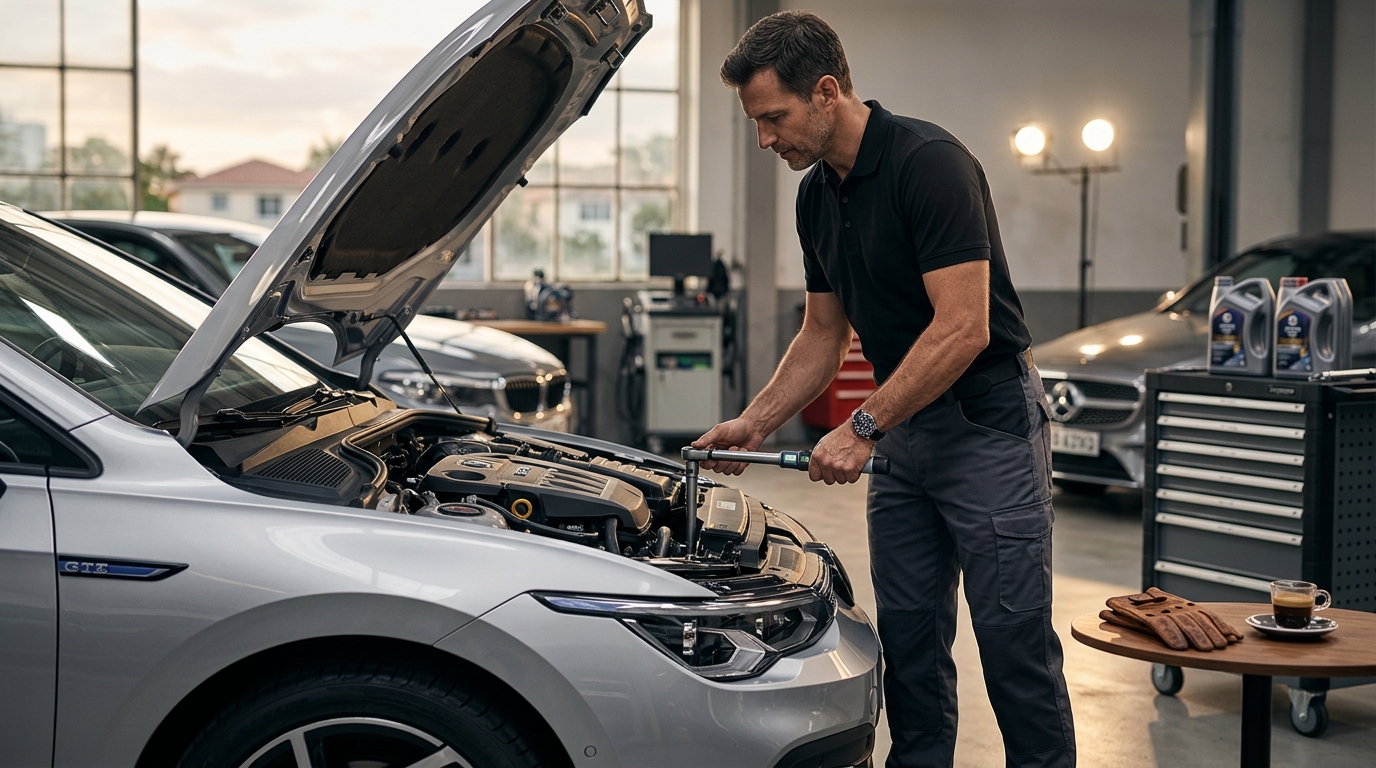
Modern Volkswagen vehicles are engineering marvels, but their complexity demands precision. According to recent automotive industry reports, nearly 30% of premature engine failures in European luxury cars stem from improper maintenance procedures rather than inherent manufacturing defects. When you drive a VW, you are investing in German precision, but that precision is fragile if handled by untrained hands. At Euro Auto Service in North Miami Beach, we see the aftermath of these common errors daily. This guide outlines the most frequent repair mistakes VW owners face and provides the professional strategies needed to protect your investment. (About Euro Auto Service)
Oil Change Errors and Timing Chain Risks
The most critical mistake VW owners make is neglecting the specific oil requirements for their engine. Volkswagen engines, particularly those with direct injection, operate under extreme pressure and heat. Using the wrong viscosity or non-approved oil can lead to accelerated wear on camshafts and timing chains.
The Timing Chain Tensioner Failure
Many older VW models, especially those with 2.0L TSI engines, are prone to timing chain tensioner failures. This is often exacerbated by using synthetic oils that do not meet VW 502.00 or 504.00 standards. When the tensioner fails, the chain can skip teeth, resulting in catastrophic engine damage. Regular oil changes with the correct specification are not just about lubrication; they are about maintaining hydraulic pressure for the tensioners.
Oil Filter Housing Gasket Leaks
A common oversight is ignoring minor oil leaks around the oil filter housing. This plastic component can warp over time due to heat cycles. If the gasket fails, oil can leak into the electrical connectors for the ignition coils, causing misfires and expensive electrical repairs. Addressing this early prevents secondary damage to the engine management system.
Misdiagnosing Electrical Gremlins
Volkswagen vehicles are essentially computers on wheels. They rely on complex networks of sensors, actuators, and control modules. A frequent mistake is replacing parts based on generic OBDII codes without performing deep diagnostic analysis.
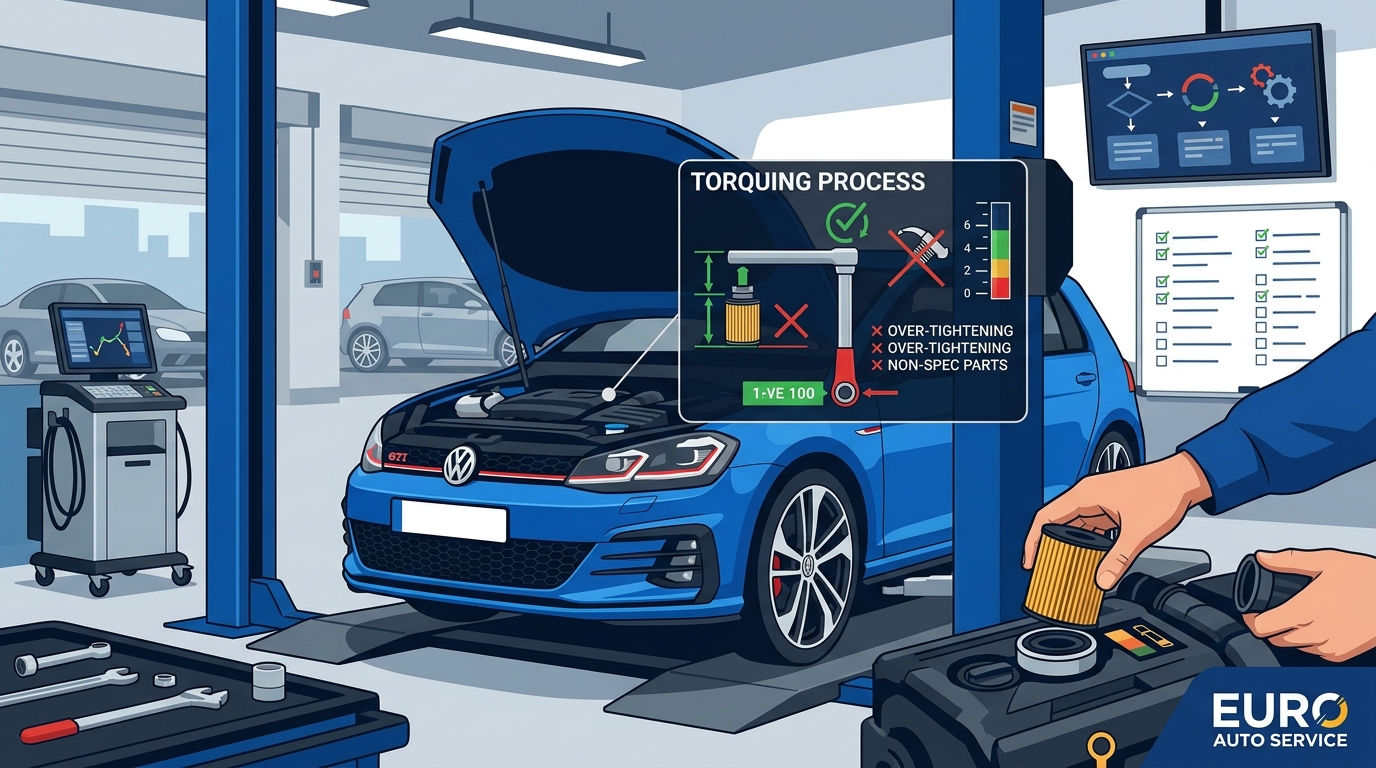
Generic vs. Manufacturer-Specific Codes
Generic scanners often provide vague data that leads to misdiagnosis. For example, a code indicating a "fuel system lean" could be a faulty sensor, a vacuum leak, or a failing fuel pump. Only factory-grade diagnostic tools can read manufacturer-specific fault codes and perform active tests to pinpoint the exact issue. This level of precision is why advanced diagnostics are essential for modern VW repair.
Ignition Coil Misdiagnosis
When a VW misfires, the instinct is often to replace all ignition coils. While coils do fail, the root cause is frequently a failing spark plug or a wiring harness issue. Replacing coils without verifying the spark plug condition and wiring integrity leads to unnecessary costs and recurring problems. Proper diagnosis involves checking the resistance of the coils and the condition of the plugs before any replacement.
Ignoring ECU Coding and Programming
One of the most technical and often overlooked aspects of VW repair is ECU (Engine Control Unit) coding. When you replace an ECU or certain modules, they must be coded to the specific vehicle. Skipping this step can result in poor performance, warning lights, and even engine shutdown.
Module Replacement Protocols
Modern VWs use a network of modules that communicate via CAN bus. If a module is replaced without proper coding, it may not recognize the vehicle's configuration. This can lead to issues with transmission shifting, steering assistance, and even the immobilizer system. Our team at Euro Auto Service specializes in ECU repair and programming to ensure all systems are synchronized correctly.
Adaptation Values Reset
After certain repairs, such as replacing a throttle body or fuel injectors, the ECU must be reset to learn the new parameters. Failure to perform these adaptations can cause rough idling and poor fuel economy. This is a subtle but critical step that many general repair shops overlook.
Using Non-OEM Parts for Critical Systems
While aftermarket parts can be cost-effective, using them for critical VW systems is a major mistake. Volkswagen engineers design components to exact tolerances. Substituting with inferior parts can compromise safety and performance.
Suspension and Steering Components
VW suspension systems are tuned for specific handling characteristics. Using non-OEM control arms or bushings can alter the geometry, leading to uneven tire wear and poor handling. This is particularly true for models with adaptive dampers, which require precise calibration.
Brake System Integrity
Brake components must meet strict safety standards. Using inferior brake pads or rotors can lead to reduced stopping power, excessive dust, and noise. For VW owners, sticking to OEM or high-quality equivalent parts ensures the braking system performs as intended.
Skipping Scheduled Maintenance Windows
Volkswagen vehicles have specific maintenance intervals that must be followed. Ignoring these schedules can void warranties and lead to premature wear. The service light is not just a reminder; it is a calculated metric based on driving conditions and engine hours.
Fluid Degradation
Transmission fluid, differential fluid, and brake fluid degrade over time. Skipping these changes can lead to internal corrosion and component failure. For example, DSG transmission fluid must be changed at specific intervals to prevent clutch wear and shifting issues.
Preventive vs. Reactive Repair
Preventive maintenance is always cheaper than reactive repair. By adhering to the scheduled service intervals, you can identify potential issues before they become major problems. This approach saves time and money in the long run.
Dealer vs. Independent Repair Analysis
Many VW owners face the dilemma of choosing between a dealership and an independent specialist. Here is a comparison of the two approaches:
| Factor | Dealership Service | Independent Specialist (Euro Auto Service) |
|---|---|---|
| Cost | Higher labor rates and parts markup | Up to 40% less than dealer costs |
| Expertise | Generalist technicians | Factory-trained specialists (e.g., BMW Level 1 Master Tech) |
| Parts | OEM only | OEM and high-quality equivalents |
| Convenience | Long wait times | Flexible scheduling and digital inspections |
At Euro Auto Service, we provide dealer-level expertise without the dealership price tag. Our team is trained to handle the most complex VW issues, from routine maintenance to advanced electrical diagnostics.
Key Takeaways
- Always use VW-approved oil specifications to protect timing chain tensioners.
- Use factory-grade diagnostic tools to avoid misdiagnosing electrical issues.
- Ensure all replaced modules are properly coded and adapted to the vehicle.
- Stick to OEM parts for critical suspension and braking components.
- Adhere strictly to scheduled maintenance intervals to prevent premature wear.
- Choose an independent specialist with factory training for complex repairs.
- Digital Vehicle Inspections (DVI) provide transparency and prevent unnecessary work.
Frequently Asked Questions
What is the most common VW repair mistake?
The most common mistake is using incorrect oil specifications, which can lead to timing chain tensioner failure and severe engine damage.
Can I use aftermarket parts for my VW?
While some aftermarket parts are acceptable, critical systems like suspension, brakes, and electrical components should use OEM or high-quality equivalents to ensure safety and performance.
How often should I change my VW's transmission fluid?
DSG transmission fluid should be changed at specific intervals, typically every 40,000 to 60,000 miles, depending on the model and driving conditions.
Why do I need factory-grade diagnostics?
Generic scanners cannot read manufacturer-specific fault codes or perform active tests, leading to misdiagnosis and unnecessary part replacements.
What is ECU coding?
ECU coding is the process of programming a new or replaced engine control unit to match the specific configuration and parameters of your vehicle.
How does Euro Auto Service compare to dealerships?
We offer dealer-level expertise and factory-trained technicians at up to 40% less than dealership costs, with a focus on transparency and customer service.
What is a Digital Vehicle Inspection (DVI)?
A DVI is a comprehensive photo and video report of your vehicle's condition, allowing you to see issues firsthand and make informed repair decisions.
Schedule Your Service Today
Don't let common repair mistakes compromise your Volkswagen's performance and longevity. At Euro Auto Service in North Miami Beach, we provide the expertise, tools, and transparency you need to keep your vehicle running at its best. Our team of factory-trained technicians is ready to handle everything from routine maintenance to complex electrical diagnostics.
Visit us at Euro Auto Service or call (786) 940-5115 to schedule your appointment. We serve North Miami Beach, Aventura, Sunny Isles Beach, and surrounding South Florida communities. Trust us to be your true alternative to the dealership service department.