

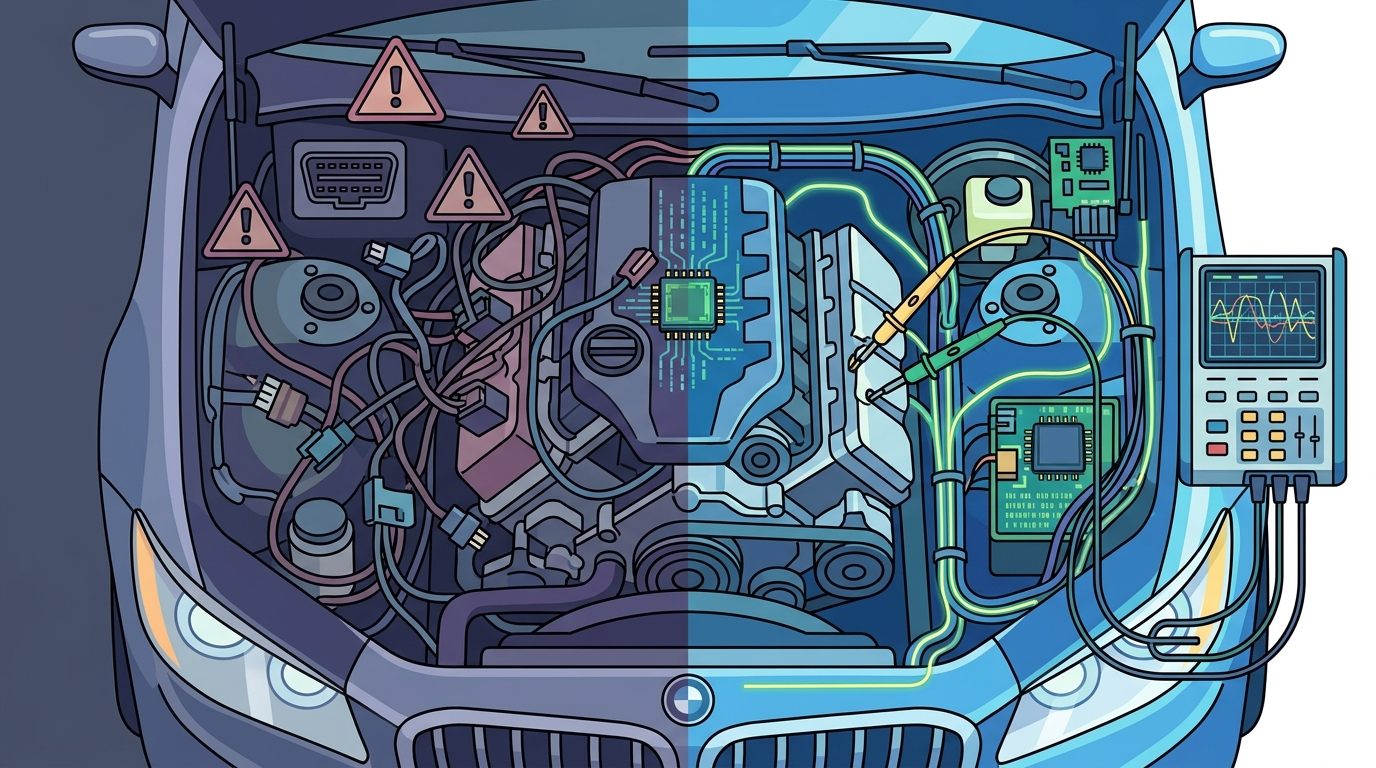
Modern European vehicles are complex machines that rely heavily on sophisticated electronic networks to function correctly. According to industry data, over 60% of modern automotive issues are related to electrical or software components rather than purely mechanical failures. This shift means that traditional mechanical troubleshooting is no longer sufficient for accurate repairs. Drivers in South Florida, from North Miami Beach to Aventura, often face inflated repair bills because initial diagnostics were performed incorrectly. Understanding these common pitfalls is essential for maintaining the performance and longevity of your BMW, Mercedes-Benz, or Audi.
The Generic Scanner Trap
One of the most frequent errors made by inexperienced technicians is relying solely on generic OBDII scanners. While these tools are excellent for reading standard emission-related codes, they are fundamentally limited when it comes to European engineering. Generic scanners often fail to access manufacturer-specific modules, such as the transmission control unit, ABS system, or complex infotainment networks.
European cars require factory-grade diagnostic tools to communicate with these proprietary systems. Without this specialized hardware, a technician might see a "Check Engine" light and replace a sensor, only to find the root cause was a wiring harness issue or a software glitch. At Euro Auto Service, we utilize advanced diagnostic technology that mirrors dealership-level capabilities. This ensures we can read manufacturer-specific fault codes and perform deep system analysis that generic tools simply cannot provide.
The Part-Swapping Fallacy
Another critical mistake is the practice of part swapping without definitive proof of failure. In the past, mechanics might replace a fuel pump or ignition coil to see if the problem resolves. This approach is dangerous and costly for modern European vehicles. Replacing a component unnecessarily not only wastes money but can also introduce new errors into the system.
For example, replacing a BMW ECU without proper programming can render the vehicle inoperable. Similarly, swapping a Mercedes-Benz transmission sensor without verifying the electrical signal can lead to continued performance issues. Precision diagnostics are required to pinpoint the exact failure point. Our team, led by BMW Factory-Trained Level 1 Master Technician Andrey Beck, ensures that every repair is backed by concrete data, eliminating guesswork and preventing unnecessary part replacements.
Ignoring Pending Codes
Technicians often focus exclusively on "confirmed" trouble codes while ignoring "pending" or "history" codes. Pending codes indicate a fault that has occurred but has not yet triggered the Check Engine light. These codes are vital for early detection of intermittent issues, such as a loose connector or a sensor that fails only under specific temperature conditions.
Ignoring these subtle warnings can lead to catastrophic failures down the road. For instance, a pending code for a Range Rover suspension sensor might indicate a developing issue that, if left unchecked, could lead to a complete suspension failure. By addressing these early signs, we can perform proactive repairs that save you time and money. This proactive approach is a cornerstone of our maintenance and schedule services, ensuring your vehicle remains in peak condition.
ECU Programming Oversights
European vehicles rely heavily on Electronic Control Units (ECUs) to manage everything from engine performance to window operations. A common diagnostic error is failing to update or reprogram the ECU after a repair. Modern ECUs are sensitive to changes in the vehicle's configuration. If a new module is installed without proper coding, the vehicle may exhibit erratic behavior or fail to start.
Our ECU Repair & Programming service addresses these complexities directly. We ensure that every new or repaired component is correctly integrated into the vehicle's network. This includes calibrating advanced systems like steering, suspension, and safety features. Proper ECU management is essential for maintaining the integrity of your vehicle's electronic ecosystem.
The Role of Digital Inspections
Transparency is key to avoiding diagnostic errors. A Digital Vehicle Inspection (DVI) provides a comprehensive photo and video report of your vehicle's condition. This process allows us to identify issues that might not be immediately apparent during a standard check. By documenting the state of your vehicle, we can prioritize repairs based on urgency and safety.
This method ensures that you are fully informed about the condition of your car. You will see what we see, allowing you to make informed decisions about your vehicle's maintenance. Our DVI process is a critical part of our service workflow, ensuring that no issue is overlooked. For more details on our inspection process, visit our Pre-Purchase Inspection page.
Comparison of Diagnostic Approaches
| Diagnostic Method | Accuracy Level | Cost Efficiency | Recommended For |
|---|---|---|---|
| Generic OBDII Scanner | Low | High | Basic emission checks only |
| Dealer-Grade Tools | High | Medium | Complex electrical issues |
| Master Technician Analysis | Very High | High | Comprehensive repairs |
Key Takeaways
- Generic scanners often miss manufacturer-specific codes, leading to misdiagnosis.
- Part swapping without data verification is a costly and ineffective practice.
- Pending codes provide early warnings for intermittent electrical issues.
- ECU programming is essential after any electronic component replacement.
- Digital Vehicle Inspections offer transparency and comprehensive vehicle assessment.
- Factory-trained technicians possess the specialized knowledge required for European cars.
- Proactive diagnostics prevent minor issues from becoming major repairs.
Frequently Asked Questions
Why do European cars require special diagnostic tools?
European vehicles use proprietary communication protocols and complex electronic networks that generic scanners cannot fully access. Specialized tools are needed to read manufacturer-specific codes and perform deep system diagnostics.
Can I fix European car issues with a generic OBDII scanner?
While a generic scanner can read basic emission codes, it often fails to identify the root cause of electrical or software-related issues. Professional diagnostics are recommended for accurate repairs.
What is a BMW Factory-Trained Level 1 Master Technician?
This is the highest certification awarded by BMW North America, requiring advanced training in engine, transmission, electrical, and communication systems. It signifies a deep expertise in BMW engineering.
How does a Digital Vehicle Inspection help?
A DVI provides photo and video documentation of your vehicle's condition, allowing for transparent communication and informed decision-making regarding necessary repairs.
What are pending codes in a car diagnostic report?
Pending codes are fault codes that have been detected but have not yet triggered the Check Engine light. They indicate intermittent issues that may require attention before they become serious problems.
Why is ECU programming important after a repair?
ECUs must be properly coded to communicate with other vehicle systems. Incorrect programming can lead to vehicle malfunctions or failure to start.
How often should I have my European car diagnosed?
Regular diagnostics are recommended during routine maintenance intervals. Early detection of issues can prevent costly repairs and ensure optimal vehicle performance.
Ready to Avoid Diagnostic Mistakes?
Don't let incorrect diagnostics lead to unnecessary repairs. Trust the experts at Euro Auto Service in North Miami Beach for accurate, dealer-level service at independent shop prices. Contact us today to schedule your appointment and experience the difference of precision European car care.